Movies that make you want to see the world burn: A cinematic guide
Explore films that delve into societal chaos and individual rebellion, perfect for those who enjoy narratives pushing the boundaries of order. These movies challenge conventions and ignite a desire for profound change.


Ever felt like the world just needs a good shake-up? Cinema has a long history of capturing that very sentiment, presenting us with characters and scenarios that question the foundations of society, morality, and even sanity. From the anarchic brilliance of Heath Ledger's Joker in The Dark Knight, whose simple desire is to watch the world burn without a grand plan, to the thought-provoking philosophical underpinnings of Fight Club, these films tap into a primal urge for destruction and rebirth.
Take A Clockwork Orange, Stanley Kubrick's controversial masterpiece, which explores themes of free will and societal control through its unforgettable protagonist, Alex. Or consider V for Vendetta, a film that, despite its dystopian setting, offers a glimmer of hope through revolutionary action, asking profound questions about freedom and government. These aren't just gratuitous acts of violence; they're often symptoms of deeper societal malaise, reflecting anxieties about power structures, consumerism, and the human condition itself.
Then there are the films that push the limits of human behavior when stripped of conventional rules, like Battle Royale or The Purge, where the thin veneer of civilization is brutally peeled back. These movies, while often disturbing, serve as powerful allegories, forcing us to confront uncomfortable truths about ourselves and the societies we inhabit. They're not just entertainment; they're provocations, designed to make you think, question, and perhaps even feel a little bit of that burning desire for something different.
13. A History of Violence (2005)
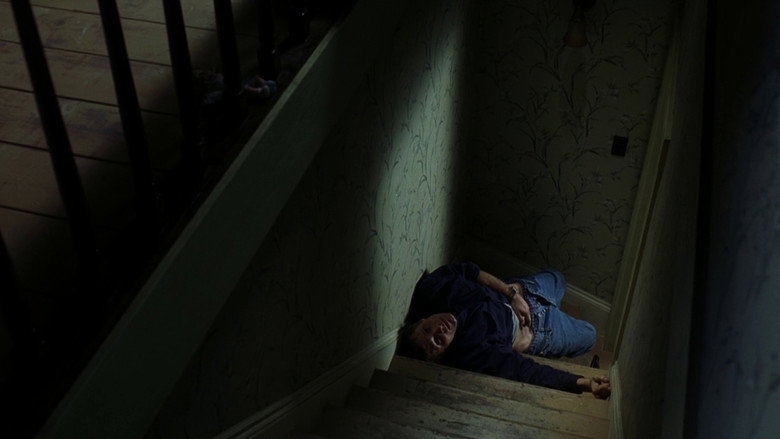
David Cronenberg's 'A History of Violence' is a gripping psychological thriller that examines the hidden depths of human nature and the inescapable grip of past actions. Viggo Mortensen plays Tom Stall, a seemingly ordinary family man whose past as a ruthless killer comes back to haunt him. The film brilliantly explores how violence, once unleashed, can ripple through lives and families, forcing characters to confront their own capacity for destruction. It's less about a grand societal burning and more about the personal conflagration that erupts when a peaceful existence is shattered by a violent past. The film earned critical acclaim for its nuanced performances and Cronenberg's masterful direction.
12. The Running Man (1987)
'The Running Man' is a classic dystopian action film starring Arnold Schwarzenegger, set in a future where convicted criminals are forced to participate in a deadly televised game show. This film is a biting satire on reality television and authoritarian control, where the public gleefully watches contestants fight for their lives against colorful, murderous 'stalkers.' It showcases a society that has embraced violence as entertainment, a clear manifestation of a collective desire to see destruction, albeit in a controlled, televised environment. The film's over-the-top action and dark humor make it a cult favorite, with Schwarzenegger delivering his signature one-liners amidst the carnage.

11. The Purge (2013)
'The Purge' introduces a chilling premise: for one night each year, all crime, including murder, is legal. This film explores the terrifying implications of such a concept, revealing the thin veneer of civilization and the raw, destructive impulses that can be unleashed. It's a thought experiment brought to life, showing how easily society could devolve into chaos and violence. The film effectively portrays a world where, for a limited time, people are given free rein to 'burn' and destroy, raising questions about justice, morality, and the true nature of humanity. The first film focuses on a single family's struggle to survive the night, adding a personal touch to the societal horror.

10. The Belko Experiment (2016)
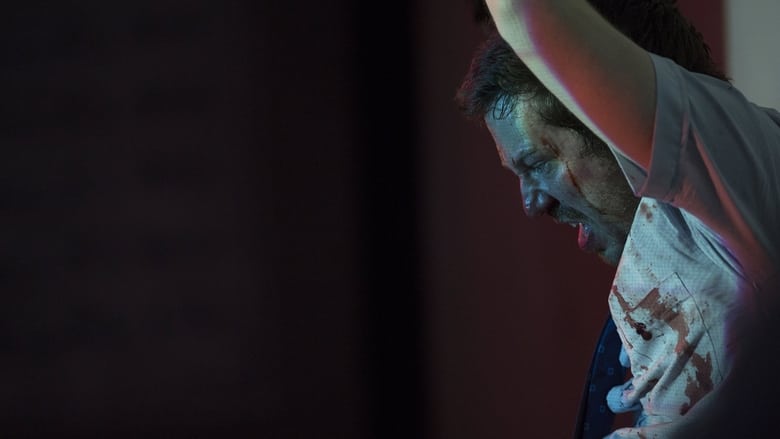
'The Belko Experiment' throws office workers into a horrifying social experiment where they are forced to kill each other or be killed themselves. Written by James Gunn, this film is a brutal and unflinching look at human nature under extreme duress. It explores how quickly civility can crumble when survival is on the line, forcing ordinary people to commit unspeakable acts. The premise perfectly encapsulates a contained scenario where a microcosm of the world is forced to 'burn' from within, revealing the dark instincts that lie beneath the surface. It's a high-tension thrill ride that doesn't pull any punches.
9. Oldboy (2003)
Park Chan-wook's 'Oldboy' is a masterclass in revenge cinema, a relentless and stylish descent into psychological torment. The story of Oh Dae-su, imprisoned for 15 years without explanation and then suddenly released, embarking on a quest for vengeance, is both captivating and horrifying. The film's brutal fight sequences, particularly the iconic hammer corridor scene, are legendary. It's a narrative fueled by a deep-seated desire for retribution, where the protagonist's world has already been burned, and he's determined to inflict similar devastation on those responsible. The shocking twists and turns make it an unforgettable, if disturbing, cinematic experience.

8. Watchmen (2009)
Zack Snyder's 'Watchmen' adapts Alan Moore's seminal graphic novel, presenting a deconstruction of the superhero mythos in a gritty, alternate 1985. The film delves into the moral ambiguities of its super-powered characters, particularly the nihilistic Rorschach and the calculating Ozymandias, whose grand plan involves a devastating act to achieve world peace. It's a film that grapples with the idea of sacrificing millions to save billions, a profound and disturbing form of 'seeing the world burn' for a perceived greater good. The intricate narrative and complex characters explore the darker side of heroism and the fine line between justice and destruction.

7. Battle Royale (2000)
Kinji Fukasaku's 'Battle Royale' is a brutal, prescient look at societal breakdown and survival. In a dystopian Japan, a class of high school students is forced to fight to the death on a remote island. The film's unflinching portrayal of violence and despair, mixed with moments of unexpected humanity, makes it a powerful allegory for the pressures of modern society. It directly illustrates a scenario where a system forces people to turn on each other, effectively creating a world where everyone wants to see others fall. This film predates and heavily influenced the 'Hunger Games' phenomenon, cementing its status as a cult classic.

6. Natural Born Killers (1994)
Oliver Stone's 'Natural Born Killers' is a frenetic, visually audacious satire on media sensationalism and violence. Mickey and Mallory Knox, played with ferocious energy by Woody Harrelson and Juliette Lewis, embark on a cross-country killing spree, becoming twisted folk heroes in the process. The film's experimental style, jumping between black and white, animation, and various film stocks, mirrors the chaotic and fragmented nature of its narrative. It's a film that directly confronts the audience's complicity in consuming violence, suggesting that the media itself fuels the desire for destruction and notoriety. The screenplay was originally written by Quentin Tarantino, though it underwent significant revisions by Stone.

5. American Psycho (2000)
Bret Easton Ellis's novel brought to life by Mary Harron, 'American Psycho' is a satirical horror film that dissects the superficiality and depravity of 1980s yuppie culture. Christian Bale's transformation into Patrick Bateman is a tour-de-force, a performance that is both terrifying and darkly comedic. The film's exploration of identity, consumerism, and unchecked male ego, coupled with Bateman's escalating acts of violence, serves as a searing critique of a society obsessed with appearances. It's a film that certainly captures a desire for destruction, albeit from a deeply disturbed and privileged perspective. The business card scene alone is a masterclass in tension and satire.

4. A Clockwork Orange (1971)
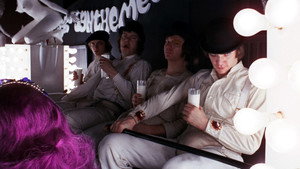
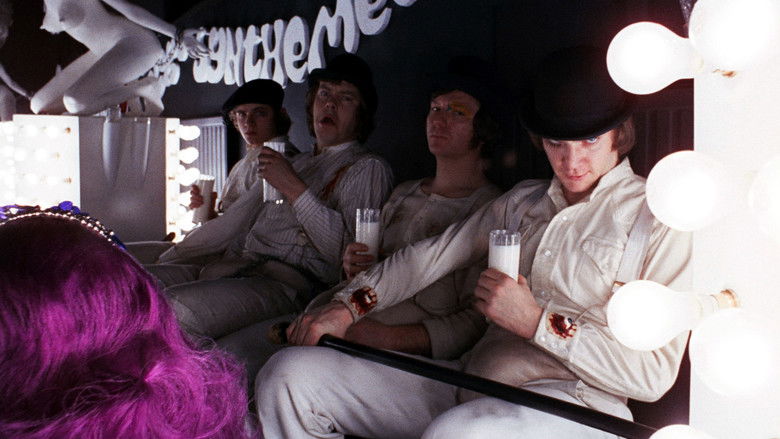
Stanley Kubrick's 'A Clockwork Orange' is a chilling and controversial masterpiece that dives headfirst into themes of free will, societal control, and the inherent violence of humanity. Malcolm McDowell's portrayal of Alex, a charismatic yet utterly depraved gang leader, is mesmerizing. The film's stylized ultraviolence and dystopian setting create a truly unsettling atmosphere, exploring how attempts to 'cure' evil can be just as horrific as the evil itself. Its critique of authority and the dark side of human nature makes it a quintessential film for those who ponder the destructive impulses within us. The futuristic slang, 'Nadsat,' was invented by author Anthony Burgess for the original novel and adds a unique, unsettling layer to the film's dialogue.
3. V for Vendetta (2006)
'V for Vendetta' offers a powerful, anarchist vision of rebellion against a totalitarian regime. Natalie Portman's Eve Hammond becomes an unlikely ally to the masked revolutionary 'V,' whose theatrical acts of defiance and explosive declarations of freedom are designed to ignite a revolution. The film's exploration of political corruption, individual liberty, and the power of ideas is incredibly potent. The Guy Fawkes mask, popularized by the film, has become a global symbol of resistance, demonstrating the movie's profound cultural influence. It's a tale of tearing down oppressive structures, quite literally with fireworks and a grand, destructive finale, that perfectly captures the spirit of wanting to see the old world order crumble.

2. Fight Club (1999)
David Fincher's 'Fight Club' is a visceral, thought-provoking journey into the psyche of a disillusioned generation. It's a film that demands multiple viewings to fully grasp its intricate layers of social commentary and psychological twists. Brad Pitt and Edward Norton deliver career-defining performances as they navigate a world of consumerism and existential angst, ultimately seeking to dismantle it. The film's subversive message about societal rebellion and the destructive nature of unchecked anger resonates deeply with the idea of wanting to see the world burn, but with a nuanced, almost philosophical edge. The iconic rules of Fight Club, especially 'The first rule of Fight Club is: you do not talk about Fight Club,' have become ingrained in pop culture, a testament to its lasting impact.

1. The Dark Knight (2008)
Christopher Nolan's 'The Dark Knight' isn't just a superhero film; it's a crime epic that redefined the genre. Heath Ledger's portrayal of the Joker is nothing short of iconic, a performance so immersive and unsettling that it earned him a posthumous Academy Award. His chaotic philosophy, encapsulated in the line 'Some men just want to watch the world burn,' perfectly articulates the destructive urge at the heart of this query. The film's gritty realism, complex narrative, and profound exploration of morality elevate it far beyond typical comic book adaptations, making it a cinematic masterpiece. The practical effects, especially the truck flip, are still astounding today, showcasing Nolan's commitment to tangible spectacle over CGI.